Construction Safety Standards in Kerala | webuilddevelopers
24-7-2026
Construction Safety Standards in Kerala Every Reputed Builder Must Follow
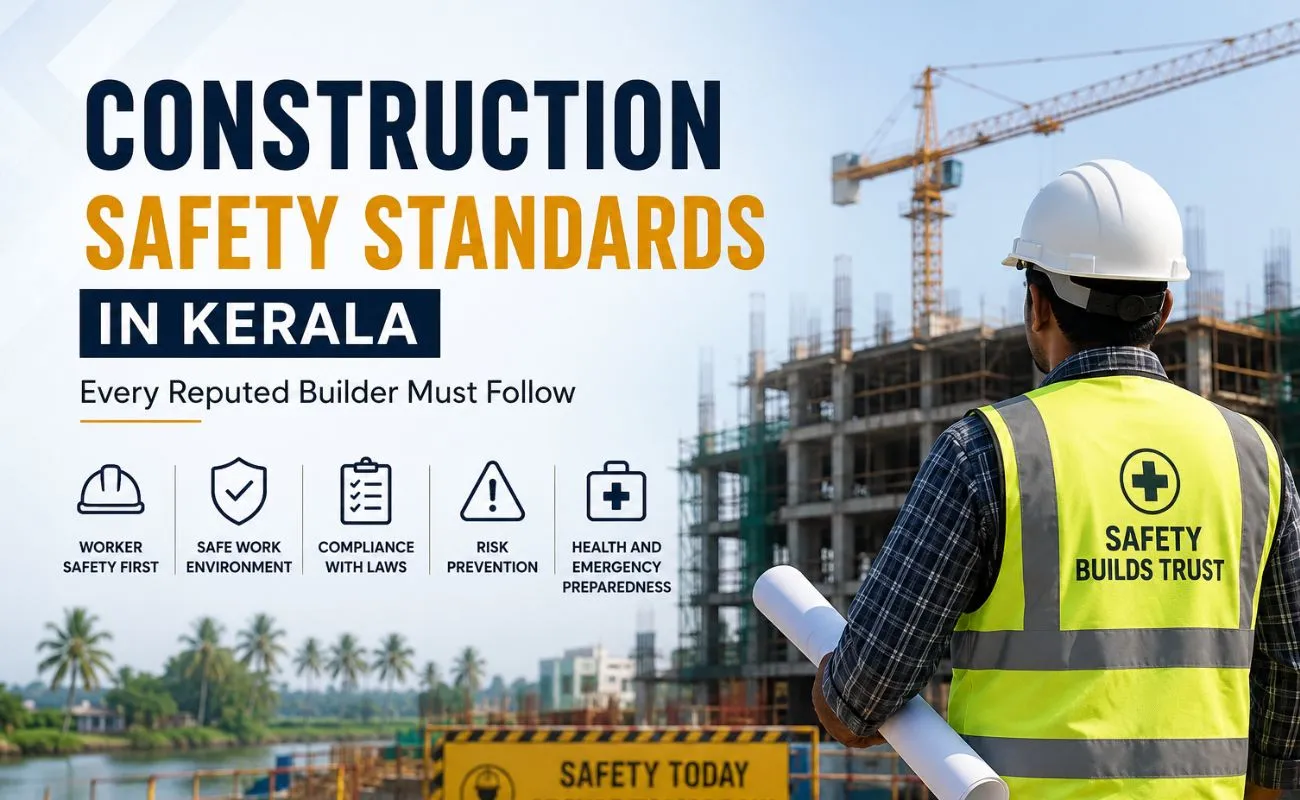
Construction projects involve more than designing and building structures. Every successful project depends on how effectively safety measures are implemented from the foundation stage to completion. In Kerala, where construction activities continue to expand across residential, commercial, and infrastructure sectors, maintaining strict safety standards has become a necessity rather than an option.
A responsible Home Builder in Kerala understands that safety directly impacts project quality, worker welfare, construction timelines, and long-term structural performance. Companies that follow professional construction practices contribute significantly to raising industry standards and ensuring safer project environments for workers and property owners alike. This commitment to safety has become a defining characteristic of reputable builders operating across Kerala.
What Are Construction Safety Standards?
Construction safety standards are a set of regulations, procedures, and best practices designed to protect workers, visitors, equipment, and structures during construction activities.
These standards establish guidelines for:
- Worker protection
- Equipment operation
- Site management
- Hazard prevention
- Emergency response
- Material handling
- Electrical safety
- Fire protection
The primary objective is to reduce accidents, prevent injuries, and create a controlled work environment throughout the construction process.
Why Are Construction Safety Standards Important?
Construction sites contain numerous potential risks. Heavy machinery, elevated workspaces, electrical installations, and moving materials create hazards that require continuous monitoring.
Safety standards are important because they:
- Protect workers from injuries and accidents
- Reduce project delays caused by incidents
- Improve overall productivity
- Enhance construction quality
- Ensure compliance with legal requirements
- Minimize financial losses
- Build trust with clients and stakeholders
In Kerala's construction environment, additional challenges such as monsoon rains, slippery surfaces, and high humidity make safety compliance even more critical.
Who Is Responsible for Construction Site Safety?
Construction safety is a shared responsibility involving multiple stakeholders.
Builders and Contractors
Builders must establish safety policies, provide protective equipment, conduct inspections, and ensure compliance with regulations.
Site Supervisors
Site supervisors are responsible for enforcing safety procedures and monitoring daily activities.
Workers
Workers must follow safety guidelines, use protective gear properly, and report hazards immediately.
Project Owners
Property owners should select a Home Builder in Kerala that demonstrates a strong commitment to safety and quality management.
Safety Officers
Large construction projects often employ dedicated safety officers who oversee risk assessments and accident prevention programs.
Where Should Safety Standards Be Applied?
Safety measures should be integrated throughout every section of a construction site.
Foundation Work Areas
Excavation zones require proper barricading, soil stability checks, and equipment monitoring.
Elevated Workspaces
Roofing, scaffolding, and structural installation activities require fall-prevention systems.
Electrical Installation Zones
Electrical work must follow strict safety protocols to prevent shocks and fire hazards.
Material Storage Areas
Proper storage prevents material damage and reduces workplace accidents.
Machinery Operation Areas
Heavy equipment requires designated operating zones and trained operators.
Safety should never be limited to specific tasks; it must become part of the site's daily culture.
How Do Reputed Builders Maintain Construction Safety?
Leading builders adopt a proactive approach rather than reacting after incidents occur.
Their safety strategies typically include:
- Regular safety audits
- Daily toolbox meetings
- Mandatory worker training
- Site hazard assessments
- Equipment inspections
- Emergency preparedness drills
- Continuous supervision
A professional Home Builder in Kerala understands that safety planning begins before construction starts and continues until project completion.
Essential Construction Safety Standards Every Builder Must Follow Personal Protective Equipment (PPE)
Workers should always use appropriate protective gear.
Essential PPE includes:
- Safety helmets
- Reflective jackets
- Protective gloves
- Safety goggles
- Safety footwear
- Ear protection
Proper PPE significantly reduces workplace injuries.
Working at Heights Safety
Falls remain one of the leading causes of construction accidents.
Key safety measures include:
- Safety harness systems
- Guardrails
- Fall arrest equipment
- Secure ladders
- Certified scaffolding
Electrical Safety Measures
Electrical hazards require strict controls.
Builders should ensure:
- Proper wiring practices
- Ground fault protection
- Insulated tools
- Lockout procedures
- Routine inspections
Scaffolding Safety
Scaffolding must be designed, assembled, and inspected by qualified personnel.
Important practices include:
- Stable foundations
- Load capacity compliance
- Secure access points
- Regular maintenance checks
Machinery and Equipment Safety
Heavy equipment must undergo routine inspections.
Safety protocols include:
- Operator certification
- Preventive maintenance
- Emergency stop systems
- Equipment monitoring
Fire Prevention Measures
Construction sites often contain flammable materials.
Fire safety standards should include:
- Fire extinguishers
- Emergency exits
- Fire drills
- Safe fuel storage
- Welding safety controls
Material Storage Guidelines
Improper storage can lead to accidents and material damage.
Best practices include:
- Organized stacking
- Weather protection
- Clear labeling
- Safe access routes
Emergency Response Planning
Every construction site should have an emergency action plan.
The plan should cover:
- Medical emergencies
- Fire incidents
- Evacuation procedures
- Emergency contacts
- Rescue protocols
Worker Training Programs
Regular training improves awareness and reduces unsafe behavior.
Training topics include:
- Hazard identification
- Equipment handling
- PPE usage
- Emergency procedures
- First aid basics
Site Inspection Procedures
Frequent inspections help identify issues before they become serious risks.
Inspection areas include:
- Structural stability
- Electrical systems
- Equipment condition
- Housekeeping standards
- Worker compliance
Modern Technologies Improving Construction Safety
Technology is transforming how builders manage safety.
Smart Safety Monitoring
Sensors and monitoring systems provide real-time data on site conditions.
Drones
Drones help inspect elevated areas without exposing workers to unnecessary risks.
AI-Powered Risk Detection
Artificial intelligence can identify potential hazards before accidents occur.
Wearable Safety Devices
Smart helmets and wearable sensors track worker health and movement.
Digital Site Inspections
Mobile inspection platforms improve reporting accuracy and response times.
Building Information Modeling (BIM)
BIM enables builders to identify safety concerns during the planning phase rather than after construction begins.
Many forward-thinking construction companies in Kerala are integrating these technologies to create safer and more efficient projects.
Common Construction Safety Mistakes Builders Should Avoid
Even experienced contractors can make mistakes when safety receives insufficient attention.
Common issues include:
- Ignoring safety training
- Inadequate PPE usage
- Poor site housekeeping
- Improper scaffolding installation
- Lack of supervision
- Overloading equipment
- Incomplete risk assessments
- Neglecting weather-related precautions
Avoiding these mistakes helps maintain safer and more productive construction environments.
How Clients Can Identify a Safety-Conscious Builder
Choosing the right builder requires evaluating their commitment to safety.
Before hiring a Home Builder in Kerala, consider asking:
- Does the company conduct regular safety training?
- Are workers equipped with proper PPE?
- Is there a documented safety policy?
- How often are site inspections performed?
- Does the builder have a dedicated safety supervisor?
- What emergency procedures are in place?
- How are accidents reported and managed?
Builders who confidently answer these questions often demonstrate a stronger commitment to professional construction practices.
Benefits of Hiring a Builder That Prioritizes Safety
Safety-focused builders deliver advantages that extend beyond accident prevention.
Better Project Quality
Safe work environments encourage greater attention to detail and workmanship.
Reduced Delays
Fewer incidents result in smoother project progress.
Lower Accident Risks
Workers remain protected throughout the construction process.
Improved Workmanship
Skilled workers perform better in organized and secure environments.
Cost Efficiency
Preventing accidents helps avoid unexpected expenses and disruptions.
Regulatory Compliance
Proper safety practices support adherence to applicable standards and regulations.
Long-Term Property Value
Well-managed construction processes contribute to durable and reliable structures.
Construction Safety Checklist Before Starting Your Project
Before construction begins, ensure the following items are addressed:
- Verify builder credentials and experience
- Review the builder's safety policy
- Confirm worker training programs
- Check PPE availability
- Evaluate emergency preparedness plans
- Ensure equipment inspection schedules are in place
- Verify scaffolding and fall protection systems
- Review electrical safety procedures
- Assess site access and security measures
- Confirm regular safety audit processes
This checklist can help property owners select a reliable and safety-conscious construction partner.
Frequently Asked Questions 1. Why are construction safety standards important in Kerala?
Construction safety standards protect workers, improve project quality, reduce delays, and ensure compliance with industry regulations.
2. How can I identify a reliable Home Builder in Kerala?
Look for builders with strong safety policies, trained workers, proper certifications, and a proven record of maintaining safe construction sites.
3. What is the most important safety equipment on a construction site?
Personal Protective Equipment (PPE) such as helmets, safety shoes, gloves, and harnesses is essential for worker protection.
4. How often should construction sites be inspected?
Safety inspections should be conducted regularly, including daily site reviews and scheduled comprehensive audits.
5. Do modern technologies improve construction safety?
Yes. Technologies such as drones, AI-based monitoring, wearable devices, and BIM significantly improve hazard detection and site management.
Conclusion
Construction safety is not simply a regulatory requirement—it is a fundamental component of successful project delivery. From worker protection and equipment management to emergency planning and technology integration, every safety measure contributes to better outcomes for both builders and property owners.
When selecting a Home Builder in Kerala, evaluating safety practices should be as important as assessing design capabilities and project experience. Builders that prioritize safety often deliver higher-quality construction, greater efficiency, and stronger long-term value.
As Kerala's construction sector continues to evolve, professionally managed companies that emphasize responsible building practices, workforce protection, and quality execution are helping shape a safer future for the industry. Exploring experienced construction partners and learning about their approach to safety can be an important step toward achieving a successful and secure building project.