How to Monitor Your Kerala Home Construction Remotely
31-10-2026
Essential Tips for Remotely Managing Construction Projects in Kerala
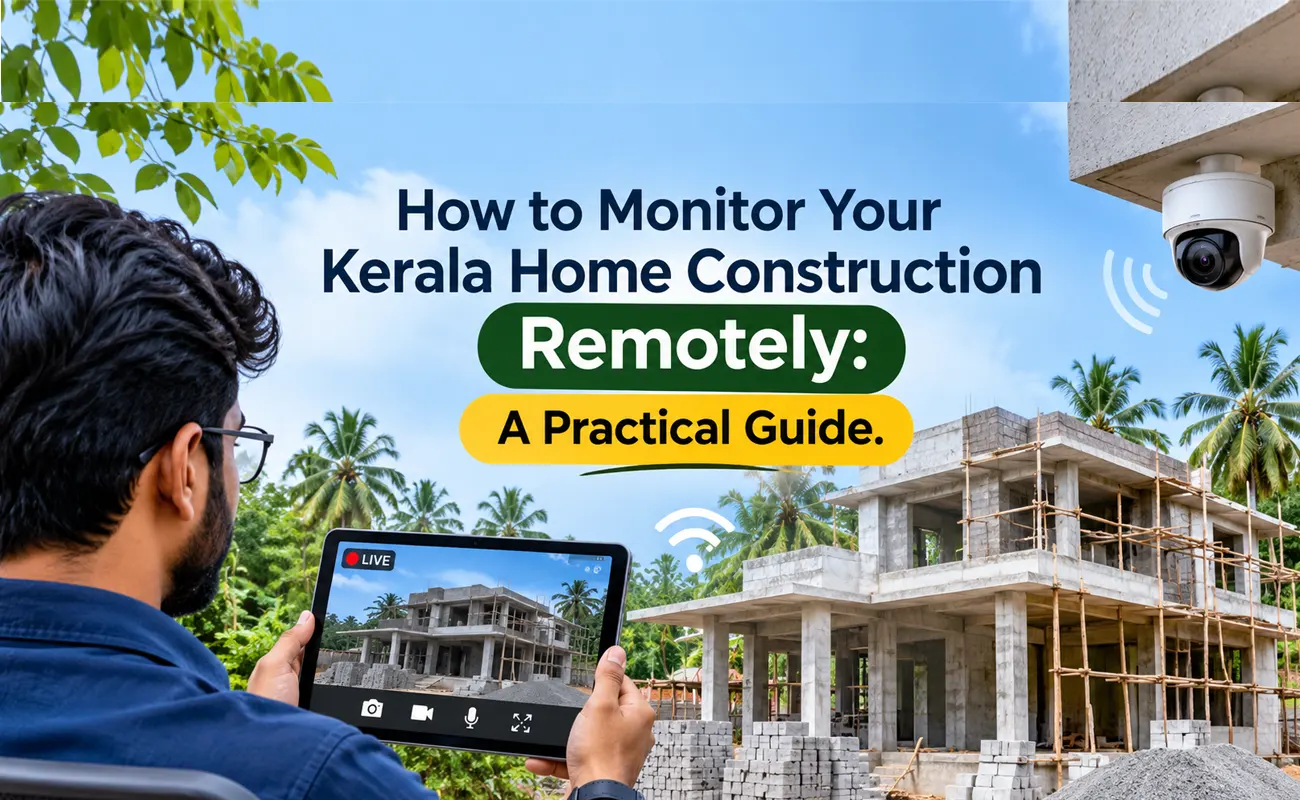
Building a house in Kerala while living in another city or country creates a challenge that goes beyond distance. Foundation work may be completed, materials may arrive at the site, and important structural decisions may be made while the homeowner is occupied with work, family responsibilities, or life abroad. Without a reliable way to track these developments, it becomes difficult to know whether the project is progressing according to the agreed plan.
The solution is not to request more photographs every day. Effective remote monitoring requires a structured process that connects visual updates with construction schedules, expense records, technical inspections, and clear communication. When these elements work together, homeowners can make informed decisions without needing to be physically present for every activity.
For anyone choosing a Home Builder in Kerala, the ability to coordinate work, document progress, and communicate project developments deserves as much attention as the initial quotation. A well-organised construction process, such as the approach homeowners should look for when evaluating builders like Webuild Developers, can make remote project management more manageable.
This guide explains how to monitor each stage of house construction from a distance, what evidence to request, which digital tools to use, and how to identify problems before they become expensive to correct.
1. Who Needs to Monitor Home Construction Remotely?
Remote construction monitoring is particularly useful for homeowners whose personal or professional commitments prevent frequent visits to their building site. In Kerala, where many people work in other Indian states or overseas while building houses for their families, staying informed throughout construction is an important part of project management.
Different homeowners may have different monitoring priorities.
- NRIs building homes in Kerala: Owners living in the Gulf countries, Europe, the UK, or elsewhere may need a dependable reporting system because travelling to the site for every construction milestone is impractical.
- Professionals working outside Kerala: People employed in Bengaluru, Chennai, Mumbai, or other cities may want to oversee construction without taking repeated leave from work.
- First-time homeowners: Those unfamiliar with construction terminology, building stages, and technical decisions can benefit from organised updates and explanations from qualified professionals.
- Busy families: Homeowners balancing employment, childcare, and other responsibilities can use scheduled reports to stay informed without constantly contacting the site team.
- Property owners managing multiple commitments: People handling business activities or other investments may need a clear overview of progress, expenditure, and pending decisions.
Remote monitoring is also valuable for homeowners who can visit the site occasionally but cannot attend every inspection.
The level of supervision required depends on the project's complexity, the construction stage, and the experience of the team managing the work. A straightforward finishing activity may need photographic confirmation, while foundation reinforcement, structural concrete work, and concealed plumbing installations require more rigorous technical checks.
The goal is to establish the right level of visibility for each stage rather than treating every activity in the same way.
2. What Challenges Do Remote Homeowners Commonly Face?
Distance creates an information gap between what is happening at the construction site and what the homeowner knows. The problem becomes more serious when there is no agreed process for sharing updates or documenting decisions.
Several challenges deserve attention before construction begins.
Incomplete progress updates
A photograph of a completed wall does not reveal how much work remains, whether the work matches the approved drawings, or what is scheduled next. Without written explanations and dated records, homeowners may struggle to understand the actual status of the project.
Unexpected expenditure
Additional work, changes in material specifications, price variations, and design modifications can affect the budget. When these changes are communicated late or only verbally, it becomes harder to understand why costs have increased.
Difficulty verifying construction quality
Images can show visible defects, but they cannot reliably confirm concrete strength, reinforcement placement in every location, waterproofing performance, or the quality of concealed installations.
Delays that become visible too late
A delay in ordering materials, completing a slab, or resolving a design issue may affect several subsequent activities. If the homeowner receives updates only after the scheduled completion date has passed, there may be fewer options for correcting the programme.
Unclear responsibility
When the contractor, engineer, supplier, and site supervisor communicate separately, instructions can become inconsistent. Homeowners may not know who is responsible for answering a technical question or resolving a pending issue.
Kerala's weather conditions
Heavy rainfall, high humidity, drainage difficulties, and wet site conditions can affect excavation, concrete activities, masonry, waterproofing, and finishing work. Remote owners need to understand how weather-related interruptions affect the schedule and what protective measures are being taken.
To reduce these risks, agree on reporting frequency, approval procedures, documentation requirements, and escalation contacts before work starts. A written record of decisions is far more dependable than relying on messages remembered differently by different people.
3. What Should You Monitor During House Construction?
A reliable remote construction monitoring system follows the actual sequence of work. Each stage has different quality requirements, and some checks must happen before the next activity covers the work.
The following checklist helps homeowners understand what to request from the site team.
Foundation and site preparation
Foundation work determines how the building transfers its loads to the ground. Photographs are useful for documentation, but technical verification must be handled by the responsible engineer.
Monitor the following:
- Site levels, excavation progress, and foundation locations against approved drawings.
- Reinforcement placement and relevant measurements before concrete is poured.
- Concrete delivery records and applicable quality-test documentation.
- Foundation completion and any required waterproofing or protective treatment.
- Backfilling and site drainage arrangements.
Ask for a dated update before concrete placement so that the engineer can inspect the work while it remains visible.
Structural work and masonry
Columns, beams, slabs, and walls need to follow the approved structural design and construction specifications.
Check whether the weekly report includes:
- The number of columns, beams, slabs, or wall sections completed.
- Progress compared with the planned schedule.
- Inspection records for reinforcement and formwork before concrete placement.
- Relevant concrete testing and curing records, where applicable.
- Wall alignment, opening locations, and dimensions against the approved drawings.
- Explanations and approvals for any changes to the structural design.
Never approve a structural modification based only on a photograph or a verbal assurance. Changes should be reviewed and authorised by the appropriate qualified professional.
Roofing and waterproofing
Kerala's rainfall makes roof drainage, terrace waterproofing, bathroom treatment, and external moisture protection important monitoring priorities.
Request updates on:
- Roof slope and the arrangement of rainwater outlets.
- Waterproofing preparation and application records.
- Treatment of joints, corners, and pipe penetrations.
- Bathroom and balcony waterproofing before tiles are installed.
- Drainage provisions around the building.
- Appropriate water testing or other verification specified for the work.
A completed, tiled terrace may look ready for use, but the finished surface alone does not establish whether the waterproofing beneath it was properly executed.
Electrical and plumbing installations
Concealed installations are among the most important stages to inspect remotely because access becomes difficult after plastering, tiling, or ceiling work.
Before the installations are covered, request:
- Photographs of electrical conduits and outlet positions.
- Plumbing routes and the locations of concealed pipes.
- Confirmation that installations match the approved drawings.
- Relevant pressure tests, electrical checks, and inspection records.
- Confirmation that the responsible professionals have checked the work.
This is also the right time to confirm switchboard positions, water points, bathroom fittings, and appliance connections. Changes made after finishing work can lead to avoidable costs.
Finishing and final handover
As construction approaches completion, shift attention from structural progress to workmanship, functionality, and the approved specifications.
Review:
- Door and window dimensions, alignment, and operation.
- Flooring levels, tile joints, and visible finishing defects.
- Plastering, painting, and damp patches.
- Electrical fixtures, plumbing fixtures, and drainage performance.
- Kitchen and storage installations, where included in the contract.
- Snag-list items, outstanding payments, and handover documents.
A useful rule: Request evidence before important work is concealed, not only after the entire stage has been completed. This simple habit makes remote monitoring more effective and gives the technical team an opportunity to identify issues while corrective work is still practical.
4. When Should You Check Your Kerala Home Construction Progress?
Monitoring should follow the pace and risk of the work rather than a fixed habit of checking the site whenever convenient. A weekly review is a useful starting point, but certain activities need attention at specific moments.
A practical monitoring schedule can include the following.
- Weekly: Review completed work, planned activities, expenses, material deliveries, delays, and pending decisions.
- Before concrete placement: Arrange the required inspection of reinforcement, formwork, dimensions, and other relevant details.
- Before concealing installations: Review electrical conduits, plumbing routes, waterproofing, and other work that will become inaccessible.
- During critical structural activities: Request timely updates and confirmation that required inspections and tests have been completed.
- During roofing and waterproofing: Monitor the work sequence, drainage provisions, and specified verification procedures.
- Before major payment milestones: Compare actual progress with the contractual milestone and obtain the required supporting records.
- During heavy rainfall: Ask about site access, water accumulation, material protection, drainage, and schedule changes.
- Before handover: Review outstanding defects, testing records, completion documents, and agreed deliverables.
Daily updates may be appropriate during fast-moving or high-risk activities, but not every project requires a daily report for every task. The frequency should be agreed upon with the construction team.
It is equally important to distinguish between a progress update and an inspection. A message stating that slab work is complete tells you what has happened; an inspection record helps establish whether the relevant checks were performed.
For homeowners working with a Home Builder in Kerala, the reporting schedule should be discussed before the agreement is finalised. This helps both parties understand when updates are expected and which activities require the homeowner's approval.
5. Where Can You Access Construction Updates From Anywhere?
Homeowners do not necessarily need specialised construction software to manage a residential project remotely. A small set of familiar digital tools can work well when the information is organised consistently.
The important factor is not how many applications the team uses, but whether the homeowner can quickly locate the latest progress report, approved drawing, expense record, or inspection document.
Shared cloud storage for construction records
Create a dedicated digital folder for the project. Organise it by date and construction stage so that photographs and documents remain easy to retrieve.
Useful folders include:
- Approved drawings and specifications.
- Foundation and structural work.
- Electrical and plumbing installations.
- Roofing and waterproofing.
- Bills, invoices, and payment records.
- Weekly progress reports.
- Site inspections and test results.
- Design changes and written approvals.
- Final handover documents.
Messaging applications for routine updates
A dedicated project communication group can help homeowners, the site supervisor, and other relevant team members exchange photographs, questions, and short progress notes.
However, important decisions should not remain buried in a long conversation. If a message approves a material change or additional expense, transfer that decision to the formal project record.
Video calls for live site walkthroughs
Scheduled video calls can help homeowners see the overall site layout, understand the work in progress, and discuss specific concerns with the person supervising the project.
Ask the site representative to show the relevant area from several angles and explain what is completed, what remains, and whether any decision is needed. For technical concerns, arrange an appropriate professional inspection rather than relying on the video call alone.
Spreadsheets and project dashboards
A shared spreadsheet can track:
- Planned and actual completion dates.
- Construction milestones.
- Approved budget and recorded expenditure.
- Payments made and amounts due.
- Pending approvals.
- Reported issues and their resolution dates.
Keep one agreed version of the record. If the contractor maintains a separate internal schedule, compare it with the homeowner's record during regular reviews to avoid conflicting information.
6. Why Is Remote Construction Monitoring Important?
The main advantage of remote monitoring is better visibility into decisions that would otherwise happen outside the homeowner's view. Its value comes from turning scattered updates into information that can be checked, compared, and acted upon.
It helps identify delays earlier
When the site team reports planned and completed activities each week, the homeowner can identify missed milestones before they affect the entire schedule.
For example, if plumbing installation is delayed, the team can explain whether the cause is material availability, incomplete masonry, a design decision, or another dependency. The next steps can then be discussed before finishing work is scheduled.
It supports budget control
Construction costs become easier to understand when each expense is linked to a work item, approved variation, or contractual milestone.
A homeowner should be able to distinguish between:
- Work already included in the agreed contract.
- Additional work requested by the owner.
- Changes caused by revised specifications.
- Unplanned costs requiring investigation or approval.
- Payments due under the agreed terms.
Remote monitoring does not automatically reduce construction costs, but it can make changes more visible and help prevent misunderstandings.
It improves accountability
Dated photographs, inspection notes, written approvals, and weekly reports create a record of what was communicated and when. If a concern arises, the parties can review the documentation instead of relying on conflicting recollections.
It makes decisions more timely
Many construction decisions involve material selections, fixture locations, finish options, and design details. A clear list of pending decisions helps homeowners respond before a delay develops.
It strengthens communication
A defined reporting process reduces the need for repeated calls asking for basic updates. The homeowner knows when to expect information, while the site team knows which details need to be documented.
The Kerala Public Works Department's quality-control guidance emphasises adherence to specifications and quality checks during building work. This reflects an important principle for private home construction too: progress should be assessed alongside workmanship and compliance, not merely by how much of the building is visibly complete.
7. How Can You Create a Weekly House Construction Progress Report?
A weekly report should answer five basic questions: What was planned? What was completed? What remains unfinished? What has changed? What needs a decision?
It does not need to be lengthy. A consistent one-page summary supported by photographs and relevant records can provide a clear overview.
Include these details in every report:
- Project details: Project name, reporting period, and the person preparing the update.
- Work completed: Specific activities completed during the week.
- Progress against schedule: Planned milestone dates compared with actual status.
- Photographic evidence: Dated images showing identifiable areas of the site.
- Material updates: Significant deliveries, shortages, or specification changes.
- Expense summary: Recorded expenditure, approved variations, and upcoming payment requirements.
- Quality and inspection status: Inspections completed, tests recorded, and issues awaiting verification.
- Pending decisions: Selections, approvals, or clarifications required from the homeowner.
- Next week's plan: Activities expected to begin or continue.
- Issues and responsibility: Any delay or concern, the person responsible for follow-up, and the expected resolution date.
What does a practical weekly report look like?
Here is a fictional example showing how a short report could be written.
Weekly Construction Progress Report
- Reporting period: 12–18 October
- Current stage: Ground-floor masonry
- Completed: Two planned wall sections completed; plumbing layout coordination discussed.
- Pending: Confirmation of selected bathroom fittings.
- Schedule status: One activity awaiting material delivery; revised completion date to be confirmed by the site supervisor.
- Quality checks: Inspection status for completed masonry recorded; plumbing work to be reviewed before concealment.
- Expenses: Latest supplier invoice uploaded; additional expenditure awaiting written approval.
- Photographs: Dated images uploaded for completed wall sections and material delivery.
- Next week's plan: Continue masonry, coordinate plumbing routes, and confirm upcoming inspection dates.
- Action required: Homeowner to confirm bathroom fittings by the agreed decision date.
This sample is illustrative, not a claim about an actual project. The details and reporting dates should reflect the real construction schedule.
The most useful reports do more than announce completion. They explain deviations, identify dependencies, and specify the next action. Over several weeks, these reports also provide a record that helps the homeowner understand the project's overall direction.
8. What Is the Step-by-Step Process for Monitoring Home Construction Remotely?
Remote monitoring works best when the process is established before the first major construction activity begins. Trying to organise reports, approvals, and inspection records after problems emerge often creates unnecessary confusion.
Follow these steps to build a dependable monitoring system.
Step 1: Finalise the construction scope and specifications
Keep the approved drawings, scope of work, material specifications, estimated budget, payment terms, and construction schedule in one accessible location. These documents form the baseline against which progress should be checked.
Step 2: Identify the responsible professionals
Confirm who will supervise the site, coordinate technical work, prepare progress reports, and communicate urgent issues. Homeowners should know whom to contact for routine updates and whom to approach when a technical decision is required.
Step 3: Agree on a reporting routine
Decide when weekly reports will be shared, how often video walkthroughs will take place, and which activities require advance notice. Establishing these expectations helps prevent communication gaps later.
Step 4: Create a central digital record
Set up folders for construction photographs, drawings, invoices, inspection reports, approvals, and progress summaries. Give relevant team members appropriate access and maintain a clear record of document revisions.
Step 5: Divide the project into measurable milestones
Instead of tracking progress through vague descriptions such as “work is moving well,” identify specific activities and expected completion dates.
For example, foundation completion, slab casting, masonry completion, electrical rough-in, waterproofing, and finishing can each be tracked as separate milestones where relevant to the project.
Step 6: Request evidence for completed activities
Ask for dated photographs, short videos, inspection records, and explanations of significant changes. Ensure that the evidence relates to identifiable areas and specific activities rather than relying on general site images.
Step 7: Arrange inspections at critical stages
Coordinate with the responsible engineer or qualified inspector before reinforcement, concealed installations, waterproofing, and other work reaches a point where verification becomes difficult.
A remote owner should not have to personally perform technical inspections. The objective is to ensure that the appropriate person checks the work and that the findings are documented.
Step 8: Compare progress with the schedule and budget
Review completed work against planned milestones and compare recorded expenditure with the approved budget. Investigate unexplained differences and discuss the corrective action required.
Step 9: Document variations and decisions
Record any changes to materials, dimensions, specifications, or scope in writing. Where necessary, obtain the required technical approval before the changed work proceeds.
Step 10: Maintain records through final handover
Continue collecting inspection documents, warranties, equipment information, approved changes, outstanding defect lists, and other agreed handover materials. Remote monitoring should not stop simply because the building appears nearly finished.
A consistent process allows homeowners to manage the project through documented information rather than depending on occasional updates or last-minute explanations.
9. What Are the Limitations of Remote Construction Monitoring?
Remote monitoring improves visibility, but it has clear limitations. Understanding these boundaries helps homeowners decide when photographs are sufficient for a progress update and when professional assessment is necessary.
Photographs cannot verify every quality issue
A photograph may show a completed concrete slab, but it cannot establish concrete strength or confirm every aspect of reinforcement placement. Such matters require appropriate inspection records, testing, and professional assessment.
What to do: Request the relevant inspection and test documentation from the responsible team. Do not treat a photograph as proof of structural quality.
Hidden work may require inspection before concealment
Electrical conduits, plumbing pipes, waterproofing layers, and reinforcement become difficult to examine after subsequent work is completed.
What to do: Agree on inspection hold points in advance. The site team should notify the responsible professional before these activities are covered.
Videos may not show the entire site
A live walkthrough can be useful, but the person holding the camera may overlook areas that need closer attention. Poor lighting, limited connectivity, and restricted access can also affect visibility.
What to do: Ask for specific views, measurements, and records where appropriate. Arrange an in-person inspection if concerns cannot be resolved remotely.
Digital records may be incomplete
Photographs without dates, invoices without work references, and reports without clear responsibilities can make project tracking difficult.
What to do: Use a standard reporting format and maintain an organised document trail. Request corrections when information is incomplete or inconsistent.
Remote monitoring cannot replace professional supervision
Construction quality depends on proper design, suitable materials, correct execution, and qualified technical oversight. A homeowner cannot reliably assess every structural or technical issue through a smartphone.
What to do: Ensure the project has the appropriate professional supervision and inspections. Consider an independent qualified engineer when concerns remain unresolved or when an additional technical opinion is warranted.
Remote monitoring is most effective when it complements professional supervision, contractual accountability, and appropriate site inspections. It should never be treated as a substitute for them.
10. What Are the Best Tools for Remote House Construction Monitoring?
The best tools are those that help the homeowner obtain reliable information without making reporting unnecessarily complicated. A small residential project may need only a smartphone, shared storage, a spreadsheet, and scheduled video calls.
The following categories cover most remote-monitoring needs.
Smartphones for site photographs and videos
A smartphone is useful for recording construction progress, material deliveries, visible defects, and completed activities.
Ask the person taking photographs to include dates, identify the relevant room or building area, and capture both an overall view and close-up images where needed. Keep the original records available for future comparison.
Cloud storage for documents
Shared cloud folders allow homeowners and authorised team members to access project records from different locations.
Use them to organise:
- Approved architectural and structural drawings.
- Construction progress photographs.
- Inspection and testing records.
- Supplier invoices and payment documents.
- Material specifications and approvals.
- Weekly progress reports.
Access permissions should be managed carefully, especially when documents contain personal or financial information.
Messaging and video-calling applications
These tools are suitable for quick clarifications, routine coordination, and scheduled site walkthroughs.
Keep casual communication separate from formal approvals. Important decisions about costs, specifications, or scope should be recorded in a way that can be retrieved easily.
Spreadsheet software for budget and schedule tracking
A shared spreadsheet can provide a simple overview of construction milestones, expenditure, payment status, pending decisions, and delays.
For example, a homeowner can record the planned completion date for a milestone, the actual completion date, the supporting report, and any follow-up action.
Project management applications
More complex projects may benefit from software that assigns tasks, records deadlines, tracks outstanding decisions, and sends reminders.
Before adopting a platform, consider its cost, ease of use, accessibility for the site team, document-sharing capabilities, and suitability for the size of the project. A complicated system that nobody updates is less useful than a simple process followed consistently.
Site-monitoring cameras
Cameras may be appropriate when a project needs more frequent visual access to specific areas. Their usefulness depends on camera placement, connectivity, power supply, site conditions, privacy considerations, and the availability of someone who can respond to concerns.
A camera can show activity, but it cannot establish whether construction work complies with technical specifications.
For most homeowners, the sensible starting point is a simple digital workflow. Additional tools should be introduced only when they solve a clearly identified monitoring problem.
11. What Common Mistakes Should You Avoid When Monitoring Construction Remotely?
Even homeowners who receive regular updates can overlook important details if the monitoring process is poorly organised. Avoiding the following mistakes makes remote oversight more effective.
Depending entirely on photographs
Pictures can demonstrate visible progress, but they do not independently verify quality, measurements, or concealed work.
Better approach: Combine dated photographs with written reports, relevant measurements, and professional inspection records.
Checking progress without consulting approved drawings
A room may look complete while its dimensions, opening locations, or service points differ from the approved plan.
Better approach: Compare important work with the current approved drawings and obtain the appropriate approval before changes are implemented.
Ignoring the construction schedule
A building may appear to be progressing because workers are active on-site, even when important milestones are falling behind.
Better approach: Review planned and actual completion dates every week, identify dependencies, and ask for a realistic recovery plan when delays occur.
Approving additional expenses verbally
Verbal discussions can lead to disagreements about the scope, price, and responsibility for extra work.
Better approach: Request a written description of the proposed change, its cost and schedule implications, and the necessary approval before proceeding, except where an urgent safety issue requires immediate action.
Waiting until work is concealed to request inspections
Once pipes, conduits, reinforcement, or waterproofing layers are covered, checking them may require opening completed surfaces.
Better approach: Establish inspection points before construction begins and request advance notification when work is ready for verification.
Failing to verify material specifications
A delivery photograph does not necessarily prove that the supplied material matches the approved specification.
Better approach: Check product details, delivery documents, relevant certificates, and test records as appropriate to the material and application.
Communicating with too many people without clear responsibility
Different team members may provide inconsistent information or assume someone else is handling a concern.
Better approach: Designate a primary contact for routine updates and identify the qualified professional responsible for technical decisions.
Treating every delay as negligence
Rainfall, material availability, design changes, and dependencies between trades can affect construction timelines.
Better approach: Ask for the reason, supporting details, the effect on subsequent activities, and the proposed corrective action before deciding how to respond.
Choosing a Home Builder in Kerala based only on the lowest quotation
A low initial price does not necessarily represent the lowest overall cost. Differences in scope, material specifications, supervision, documentation, and exclusions can make quotations difficult to compare.
Better approach: Evaluate the complete scope of work, contractual responsibilities, construction schedule, quality-control arrangements, reporting practices, and payment terms. Ask how the builder will keep you informed when you cannot visit the site regularly.
Failing to organise records
Scattered photographs, missing invoices, and undocumented changes make it harder to resolve disputes or prepare for handover.
Better approach: Maintain a central project record and update it consistently from the start.
The purpose of monitoring is not to interfere with every construction activity. It is to ensure that the right information reaches the right person at the right time, enabling problems to be addressed before they become more difficult to resolve.
Conclusion
Monitoring a house under construction from another location is less about being constantly connected to the site and more about having a dependable process for understanding what is happening. Regular progress reports, dated photographs, organised financial records, clear approval procedures, and timely technical inspections give homeowners a stronger basis for making decisions.
For a house being built in Kerala, this process should account for local weather conditions, drainage, waterproofing, construction-stage inspections, and the need to verify concealed work before it is covered. Digital tools make communication easier, but they work best when supported by qualified professionals and clearly defined responsibilities.
Choosing the right Home Builder in Kerala also means looking beyond the building's appearance or the initial quotation. A builder's approach to coordination, documentation, quality checks, and communication can make a meaningful difference to homeowners managing projects remotely. These are important considerations when evaluating construction partners such as Webuild Developers.
Before construction begins, establish your reporting schedule, identify the person responsible for site updates, agree on inspection milestones, and create a central record for drawings, expenses, and approvals. With these arrangements in place, you can remain informed, respond to important decisions on time, and oversee your Kerala home construction with greater confidence, even when you are far from the site.