Understanding RERA Guidelines for Builders in India
20-5-2026
Understanding RERA Guidelines for Builders in India
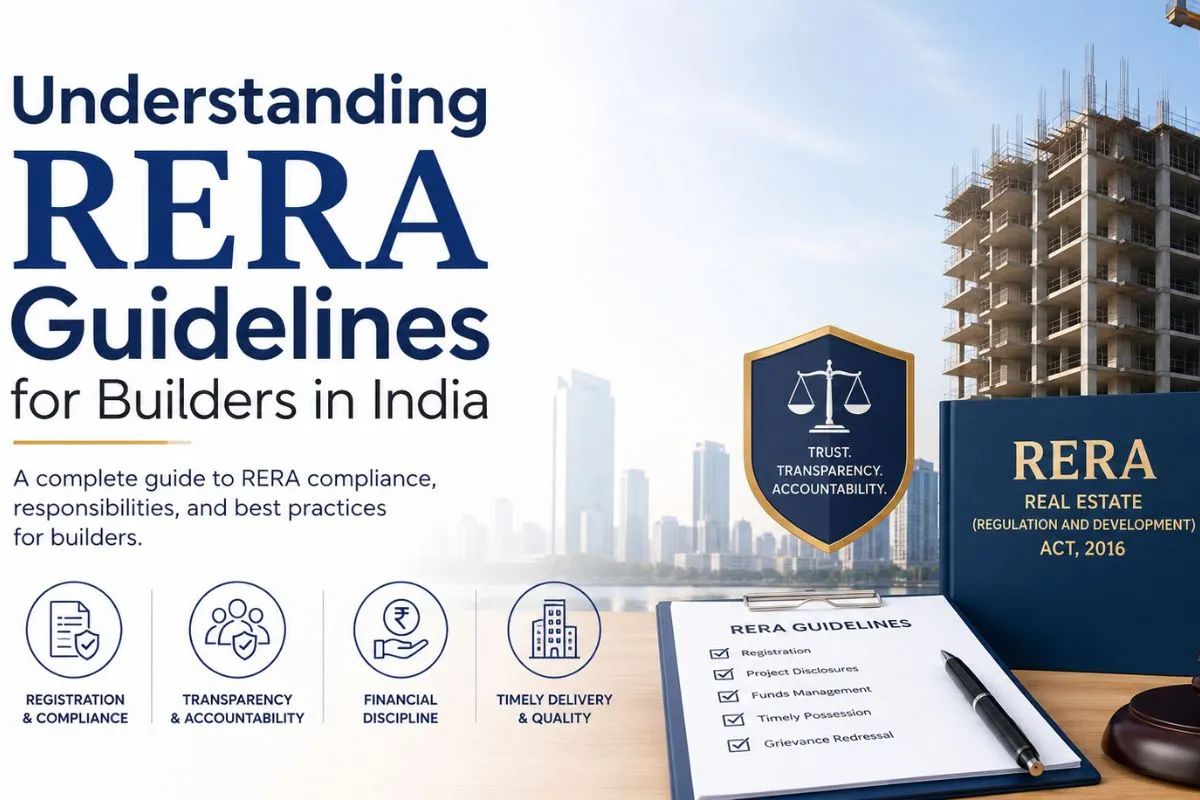
The Indian real estate sector has witnessed a major transformation over the last few years. Buyers today are more informed, cautious, and focused on choosing legally approved projects from reliable developers. This shift has increased the importance of transparency and accountability in construction practices across the country. One of the biggest reasons behind this change is the implementation of the Real Estate (Regulation and Development) Act, commonly known as RERA.
For every modern Webuild Developer and other experienced construction firms operating in India, understanding RERA guidelines is no longer optional. From project registration to financial compliance, builders are expected to maintain professional standards that protect both buyers and developers. Especially among trusted Home Builders in Kerala and every reputed Construction Company in India, compliance with RERA has become a mark of credibility and responsible development.
What is RERA?
RERA stands for the Real Estate (Regulation and Development) Act, introduced by the Government of India in 2016 to regulate the real estate industry. The primary goal of this law is to create a transparent and buyer-friendly environment in the construction and property market.
Before RERA, many homebuyers faced delays, hidden charges, misleading project advertisements, and incomplete developments. The law was introduced to solve these long-standing issues while improving trust between builders and buyers.
Today, RERA acts as a regulatory framework that ensures:
- Timely completion of projects
- Transparent communication
- Proper use of buyer funds
- Legal accountability for builders
- Fair practices in property transactions
For builders, RERA also provides a more organized and professional business environment.
Why Was RERA Introduced?
The Indian real estate market once lacked a centralized regulatory system. This created confusion for buyers and allowed unethical practices to continue without proper monitoring.
RERA was introduced to:
- Protect homebuyers from project delays
- Increase transparency in construction projects
- Reduce fraud in property transactions
- Ensure fair pricing and legal accountability
- Standardize the real estate sector across India
The law has also encouraged professional construction companies to adopt better operational standards. Many reliable home construction companies now use RERA compliance as a foundation for building long-term customer trust.
Who Must Register Under RERA?
RERA registration is mandatory for most residential and commercial real estate projects in India.
Builders and developers must register projects if:
- The land area exceeds 500 square meters
- The project contains more than 8 apartments
- The property is being marketed or sold before completion
The law applies to:
- Residential apartment projects
- Villa developments
- Commercial construction projects
- Mixed-use developments
- Ongoing projects without completion certificates
Smaller projects below the specified limits may receive exemptions depending on state regulations.
When Does RERA Apply to a Project?
RERA becomes applicable before builders advertise, market, sell, or book any property unit.
A project requires RERA registration when:
- Construction is planned for sale
- Buyers are invited for bookings
- Promotional activities begin
- Advance payments are collected
Builders cannot legally market projects without obtaining a valid RERA registration number. This rule has significantly reduced misleading property advertisements in India.
For every professional Construction Company in India, early compliance with RERA helps avoid legal complications and strengthens project credibility.
Where Are RERA Guidelines Applicable?
RERA applies across India, although each state has its own regulatory authority and implementation rules.
Examples include:
- Kerala RERA
- Maharashtra RERA
- Tamil Nadu RERA
- Karnataka RERA
Every state authority manages:
- Project registrations
- Complaint handling
- Compliance monitoring
- Penalty enforcement
This state-level system allows better local governance while maintaining the core objectives of the national law.
How Does RERA Work for Builders?
RERA introduces a structured process that builders must follow throughout the lifecycle of a project.
The process generally includes:
- Project registration
- Submission of approvals and legal documents
- Financial disclosures
- Regular construction updates
- Buyer communication
- Timely completion and possession
Builders are expected to provide accurate project information through official RERA portals. This includes:
- Approved plans
- Layouts
- Construction timelines
- Government approvals
- Contractor details
- Completion schedules
This system promotes transparent building practices and improves buyer confidence in legally approved construction projects.
Major RERA Guidelines Builders Must Follow Project Registration Requirements
Builders must register eligible projects with the respective state RERA authority before any marketing activities begin.
Documents typically required include:
- Land ownership documents
- Approved building plans
- Project specifications
- Contractor information
- Financial details
- Completion schedules
Without registration, project promotions become illegal.
Timeline Commitments
One of the most important RERA guidelines involves project delivery deadlines.
Builders must:
- Declare expected completion timelines
- Avoid unnecessary project delays
- Compensate buyers for unjustified delays in certain cases
This has improved accountability in India’s construction industry.
Transparency in Project Details
RERA requires builders to disclose accurate project information publicly.
This includes:
- Carpet area details
- Layout plans
- Amenities
- Approvals
- Construction status
- Legal clearances
False claims or misleading advertisements can result in legal penalties.
Financial Compliance
Under RERA regulations, builders must deposit 70% of buyer funds into a dedicated escrow account.
This amount can only be used for:
- Land expenses
- Construction costs
- Project-related activities
The rule prevents fund diversion and helps ensure project completion.
Quality Assurance Obligations
Builders remain responsible for structural defects and workmanship issues for a specific period after possession.
This encourages:
- Better construction quality
- Safer residential developments
- Improved engineering standards
Trusted Home Builders in Kerala increasingly focus on quality-driven construction to maintain long-term customer trust.
Buyer Communication Standards
RERA promotes regular communication between builders and buyers.
Developers must provide:
- Construction progress updates
- Timeline information
- Legal documentation
- Changes in project status
Clear communication reduces disputes and improves customer satisfaction.
Penalties for Non-Compliance
Builders violating RERA rules may face serious consequences.
Possible penalties include:
- Heavy financial fines
- Project suspension
- Imprisonment in severe cases
- Cancellation of registration
- Restrictions on future projects
Failure to register projects can lead to penalties up to 10% of the project cost. Repeated violations may result in harsher legal action.
This strict enforcement has encouraged many construction firms to adopt more professional compliance systems.
Benefits of RERA for Builders
Although RERA introduced stricter rules, it also created several long-term benefits for genuine developers.
Improved Market Credibility
Builders following RERA regulations gain stronger buyer confidence.
Today, many customers specifically prefer:
- Legally approved projects
- Transparent builders
- Registered construction companies
Better Industry Reputation
RERA has helped eliminate several unethical practices from the industry. This creates fair competition for professional builders.
Reliable companies now stand out more clearly in the market.
Increased Buyer Trust
Buyers feel more secure when investing in RERA-approved projects. This trust can improve:
- Project bookings
- Brand reputation
- Customer referrals
Organized Project Management
The law encourages builders to improve:
- Documentation systems
- Financial management
- Construction planning
- Timeline execution
This results in more efficient project operations.
Benefits of RERA for Homebuyers
RERA has significantly improved the property buying experience in India.
Greater Transparency
Buyers can verify project details online through official RERA portals.
This includes:
- Registration status
- Project progress
- Completion timelines
- Builder credentials
Protection Against Delays
Builders are now more accountable for project completion timelines.
If delays occur without valid reasons, buyers may receive compensation.
Reduced Risk of Fraud
The law has minimized:
- Fake project advertisements
- Hidden charges
- Misleading promises
- Unauthorized developments
Better Construction Quality
Defect liability provisions encourage builders to maintain higher quality standards.
This benefits buyers looking for long-term residential investments.
Common Challenges Builders Face Under RERA
Despite its advantages, builders also face practical challenges under RERA compliance.
Delays in Government Approvals
External approval delays can affect project timelines even when builders are prepared.
Increased Documentation
Builders must maintain extensive legal and financial records throughout the project lifecycle.
Financial Pressure
The 70% escrow rule limits fund flexibility for developers.
Smaller builders may experience cash flow challenges.
Strict Timelines
Unexpected situations such as:
- Material shortages
- Labor issues
- Weather conditions
- Regulatory delays
can affect project schedules.
Still, organized builders with proper planning are adapting successfully to the new regulatory environment.
Tips for Builders to Stay RERA-Compliant
Builders can improve compliance and reduce legal risks by following structured practices.
Maintain Proper Documentation
- Keep approval records updated
- Store legal documents securely
- Maintain transparent financial statements
Improve Project Planning
- Create realistic construction schedules
- Avoid overpromising delivery timelines
- Monitor project progress regularly
Strengthen Buyer Communication
- Share updates consistently
- Address buyer concerns quickly
- Maintain transparent communication channels
Use Professional Compliance Support
- Work with legal advisors
- Hire experienced project consultants
- Conduct internal compliance audits
Focus on Construction Quality
- Use quality-approved materials
- Follow engineering standards
- Ensure regular site supervision
Professional Construction Companies in India increasingly view compliance as a long-term business advantage rather than a legal burden.
Future of RERA in India
RERA continues to reshape India’s real estate industry in a positive direction.
In the coming years, the law is expected to:
- Improve buyer confidence further
- Increase transparency across the sector
- Encourage professional construction practices
- Reduce project fraud and delays
- Strengthen digital compliance systems
As the industry evolves, builders who adapt early to compliance-driven operations are likely to gain stronger market credibility.
Many modern Home Builders in Kerala and reliable developers across India are already aligning their operations with these expectations to build long-term trust and sustainable growth.
What is the main purpose of RERA?
The main purpose of RERA is to regulate the real estate sector by improving transparency, accountability, and buyer protection in construction projects across India.
Is RERA registration mandatory for all builders?
RERA registration is mandatory for most residential and commercial projects that exceed the prescribed size limits set by the law.
What happens if a builder violates RERA rules?
Builders violating RERA regulations may face financial penalties, project suspension, registration cancellation, or imprisonment in severe cases.
How can buyers verify a RERA-registered project?
Buyers can verify project registration details through the official RERA website of their respective state.
What is the 70% rule in RERA?
The 70% rule requires builders to deposit 70% of buyer funds into a separate escrow account used only for construction and land-related expenses.
Does RERA apply to commercial projects?
Yes, RERA applies to both residential and commercial real estate projects that meet the registration criteria.
How long is the defect liability period under RERA?
Under RERA, builders are responsible for fixing structural defects and workmanship issues for five years after project possession.
Conclusion
RERA has become one of the most important regulatory reforms in India’s construction and real estate sector. It has improved transparency, strengthened buyer protection, and encouraged responsible development practices across the country.
For builders, RERA is more than a legal requirement. It represents a shift toward organized project management, quality assurance, and trustworthy construction standards. Companies that prioritize compliance are increasingly viewed as dependable partners for modern residential and commercial developments.
Experienced firms like Webuild Developers reflect this evolving approach by understanding the value of transparent construction practices, professional execution, and customer-focused project delivery. As buyers continue to seek reliable and legally compliant projects, builders who embrace these standards are better positioned for long-term success.
Readers looking to understand modern construction practices, compliant development standards, and responsible building approaches can explore more insights through the website.